
Validated Dispensing Solutions for Dymax HLC™ Materials
As Dymax continues expanding its portfolio of HLC™ Materials, dispensing method and packaging format play an important role in maintaining material performance. A common customer question is whether changes in syringe format or dispensing equipment will affect shot size, accuracy, or overall process stability.
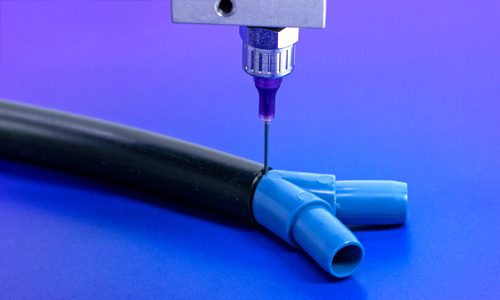
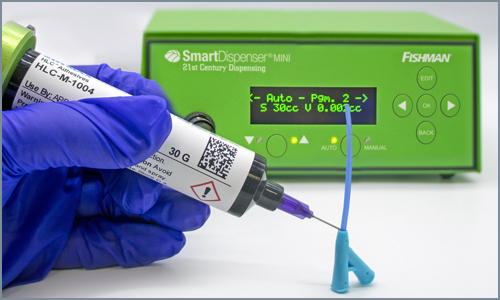
To support optimal handling of HLC Materials, Dymax is in the process of validating syringe formats used with Fishman’s air-free, mechanically controlled dispensing systems. This approach helps minimize exposure to air and light during dispensing, reducing the risk of premature curing and supporting more stable material behavior. 30cc syringes are available now with other sizes planned for the HLC product line later this year.
A key focus of this evaluation was understanding whether this change in dispensing method would introduce any meaningful variation in shot size or process performance. Testing showed that, when paired with a controlled dispensing system, the impact on volumetric output was minimal. Deposit size and repeatability remained stable across a range of viscosities, conditions, and applications. Please reach out to Application Engineering to discuss your project.
These findings reinforce that system control and process setup have a greater influence on dispensing performance than small differences in syringe format.
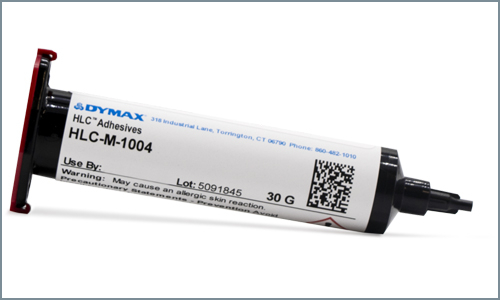
When Michelle Evanoski, Dymax Senior Global Business Development Manager for Medical, and Scott Beebe, President of Fishman Corporation, discussed evaluating the dispensing performance of Dymax HLC Materials, they shared a common goal: to find out how well Fishman’s SmartDispenser® platforms could support the unique behavior of hybrid light-curable materials in real-world manufacturing environments.
What followed was a hands-on collaboration, part technical, part problem-solving, and entirely focused on the customer experience.
As Dymax continues expanding its portfolio of HLC Materials, this partnership highlights our commitment to working side-by-side with equipment innovators to bring customers clear, validated solutions that simplify their process.
Why We Partnered With Fishman
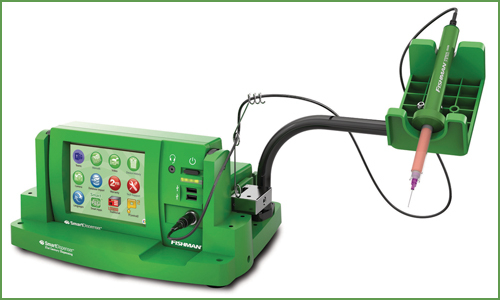
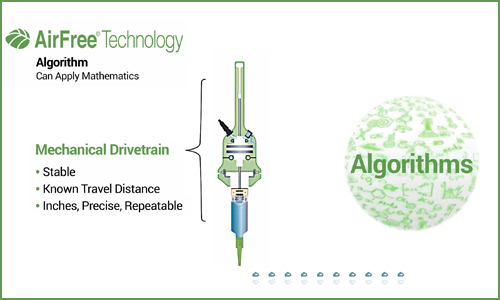
Fishman’s air-free, digitally controlled SmartDispenser® systems are known for eliminating variability and supporting highly repeatable dispensing. Unlike traditional pneumatic dispensers, which rely on compressed air, which can introduce pressure fluctuations and inconsistent deposits, Fishman systems use an algorithm controlled mechanical drive system to deliver precise, repeatable material flow.
 |
 |
That made them an ideal collaborator as Dymax validated dispensing approaches for hybrid light-curable materials, which can behave differently than traditional UV chemistries.
HLC Materials cure in both light and dark areas, supporting today’s smaller, more complex medical devices. This capability helps address common challenges in medical device assembly, where shadowed areas, tight geometries, or opaque substrates can limit light access.
To fully benefit from this capability, manufacturers need systems that deliver stable, consistent deposits.
Partnering with Fishman helps ensure that customers get a solution that is both proven and practical.
Shot Size, Accuracy, and Equipment Compatibility
Shot size selection plays a key role in dispensing performance, directly influencing deposit accuracy, repeatability, and overall process stability. In many applications, especially those involving small or precise deposits, even minor variations in shot size can affect final part quality.
Dispensing equipment has a significant impact on how consistently a user can achieve the target shot size. Systems that rely on compressed air can introduce variability due to pressure fluctuations or changes in material behavior during use. In contrast, mechanically controlled dispensing systems provide more consistent volumetric output, which helps maintain accuracy across repeated deposits.
Material behavior is also an important factor. Hybrid light-curable materials can exhibit characteristics such as wicking or sensitivity to environmental exposure, which influence how a shot forms and settles after dispensing. Tip selection, substrate interaction, and process parameters all contribute to the final deposited volume.
As part of the joint evaluation, Dymax and Fishman examined how these variables interact when dispensing HLC Materials using SmartDispenser® systems. A key focus was ensuring consistent shot sizes across different viscosities and realistic production conditions.
Initial testing was conducted using 30 cc syringes with ongoing validation of additional sizes, all formats used in Fishman’s SmartDispenser® platform. Results showed that, when paired with a controlled dispensing system, the impact of syringe format on shot size was minimal. Deposit size and repeatability remained stable, indicating that system control and process setup play a greater role in dispensing performance than small differences in syringe configuration.
Insights From the Dymax and Fishman Teams
As part of the partnership, Fishman conducted hands-on testing to understand better how their SmartDispenser® and SmartDispenser® MINI™ platforms performed with HLC Materials. Their work explored:
• Repeatability across several HLC material viscosities
• Dispensing technique optimization
• Influence of different substrates
• Tip performance and light protection required
• Realistic production-style handling
Because SmartDispenser® systems create mechanical movements that are digitally controlled to drive material delivery, they provide consistent volumetric dispensing, which is particularly helpful when working with materials that may be sensitive to technique or process variation.
Although lower-viscosity hybrid light-curable materials can exhibit wicking, the SmartDispenser® system delivered strong consistency when paired with the appropriate tip and technique. The standard deviations looked good, stability was solid, and results were repeatable when used with optimized techniques.
Inside the Partnership
Q: What stood out most during the evaluation?
Michelle:
HLC materials can be challenging to dispense because they behave differently from standard light-curable materials. Seeing how the SmartDispenser® controlled flow, even with more challenging viscosities, was encouraging and showed that the system can deliver consistent results.
Scott:
We appreciated our involvement early in the process. Working directly with the material experts helped refine techniques quickly and confirm what works best for end users.
Q: Why are hybrid light-curable materials unique from a dispensing standpoint?
Michelle:
Hybrid light-curable materials combine the performance of traditional light-curable adhesives with rapid, moisture- or contact-activated anionic cure. This capability makes them versatile, but also sensitive to air exposure, particularly in humid environments, if conditions are not well controlled.
Using an air-free platform helps maintain stability, reduces the chance of premature reaction within the fluid path, and supports more consistent deposits. With behaviors like wicking, validating the right dispensing setup is especially important.
Scott:
Our air-free, digitally controlled platform isolates the material from air and removes variables that can influence dispensing behavior, supporting consistent flow and repeatable deposit sizes.
Q: What does this combined solution mean for customers?
Michelle:
Less trial and error and a more direct path to a stable process. Because we evaluated the SmartDispenser® with HLC Materials, customers can start with a proven and refined setup.
Scott:
A reliable platform for consistent results. Customers get a dispensing approach already validated with HLC materials and supported by both Fishman and Dymax.
How This Collaboration Benefits Customers
Repeatable, Reliable Dispensing
Digitally controlled, air-free dispensing supports consistent deposits, even with materials that can be sensitive to technique or setup.
Proven Compatibility With HLC Materials
The SmartDispenser® platforms performed well with hybrid light-curable chemistries across multiple viscosities, substrates, and realistic production methods.
A True Partnership Approach
Customers benefit not just from equipment or material, but from a collaborative solution tested by both teams working together.
Looking Ahead
As Dymax continues expanding its portfolio of HLC™ Materials, the Fishman SmartDispenser® systems offer a validated, dependable dispensing option that complements hybrid light-curable materials and supports real production needs. Together, the teams have established a practical, proven dispensing approach manufacturers can trust as they bring new devices to market.
Enjoying This Content? Let’s Stay Connected.
If you’re finding value in our insights, why not get more of it—delivered right to your inbox? Subscribe to receive the latest technical articles, white papers, product news, and expert tips.